Street Photography in Bucharest, Romania
Back in November I spent a few days doing street photography in Bucharest, the Romanian capital of around two million people. This was part of a broader project exploring the street photography potential of major European cities. Here I want to share what I discovered and what I enjoyed most about photographing Bucharest.
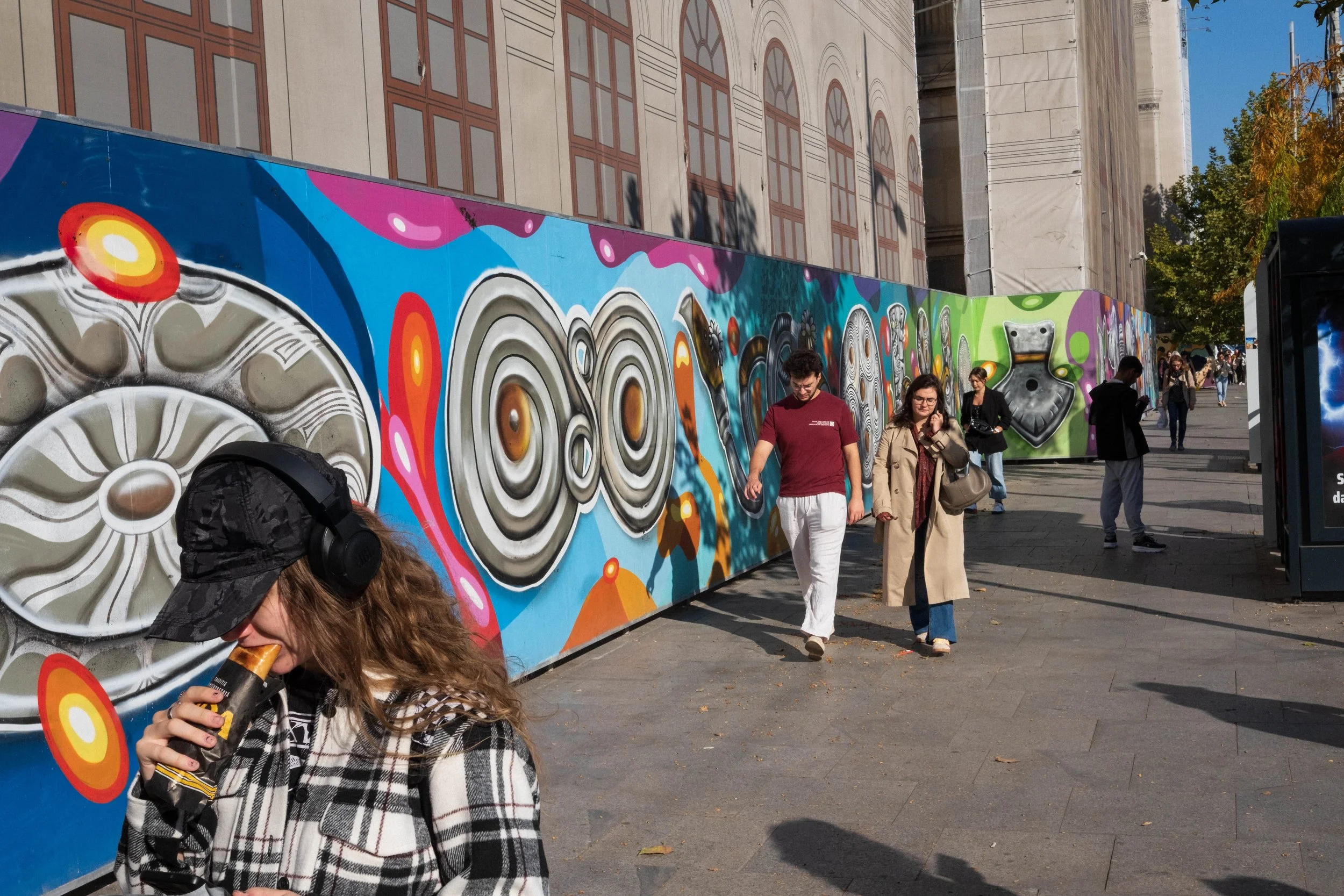
University area, Queen Elisabeth Street, Nov 2025
Downtown area
The weather was glorious in late autumn, flooding the city centre - where I spent most of my time - with sunshine. This provided many opportunities to play with shadows and contrast, which were particularly dramatic in and around the old town, the erstwhile “Paris of the East”, characterised by French-built architecture from the late 19th and early 20th centuries.
My single favourite street was Calea Victoriei (Victory Avenue), which runs all the way through the city centre north towards the suburbs. If I had just one day in Bucharest, this is where I would focus my efforts. It was also lively around the University of Bucharest, with students constantly coming and going, filling nearby squares and cafés.
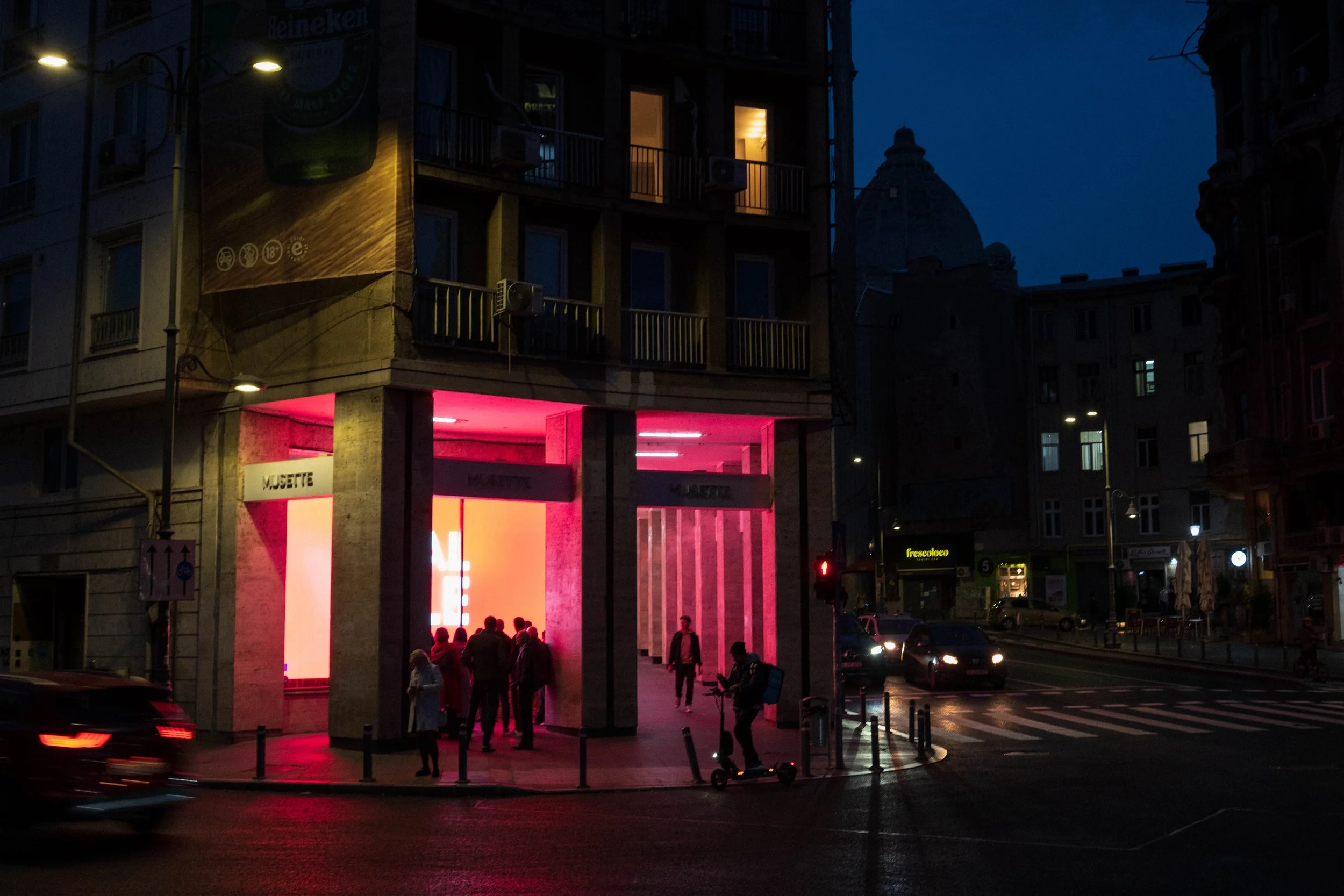
Victory Avenue, Nov 2025
Communist atmosphere
Nicolae Bălcescu Boulevard, between University and Romană squares, felt especially evocative of the communist era, lined on both sides by imposing apartment blocks. For more of this atmosphere, I would also recommend taking a ride on the metro. The older sections remain reminiscent of the late 1970s, when the system was built under Nicolae Ceaușescu, the long-time dictator who came to symbolise the repressive nature of Communist Romania.
His legacy is still viscerally palpable in the vast expanses of concrete that dominate Bucharest’s urban fabric and is bound to come through in street photographs.
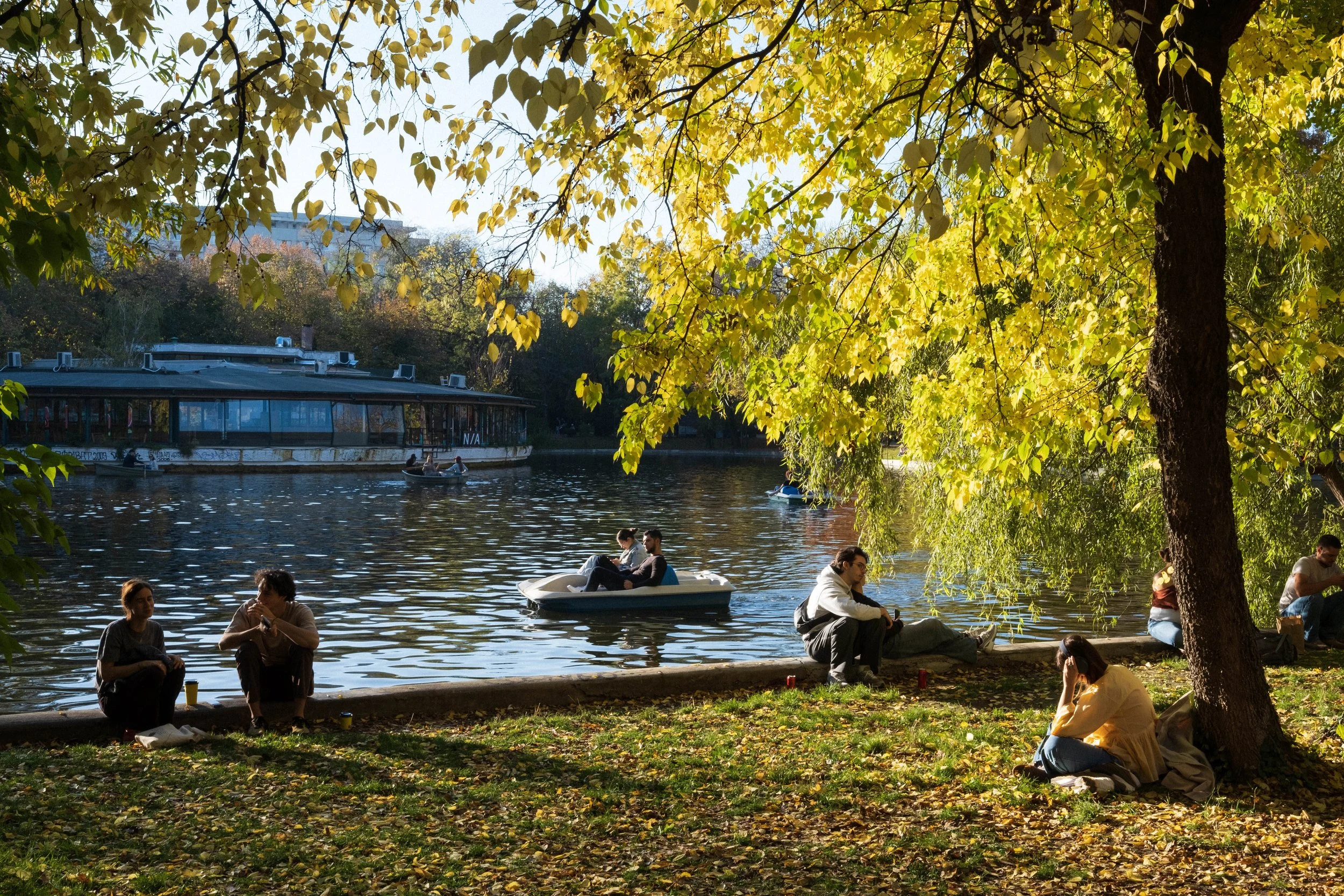
Cișmigiu Park, Nov 2025
Parks
Another highlight was Bucharest’s parks. The first, Cișmigiu Park, established in the mid-19th century, had a romanticist feel, with fanciful bridges and winding paths around a large lake. Given its central location and the fine weather, it was teeming with people - sunbathers, readers, and couples strolling.
The other park, named after King Mihai I, lies further north near the city’s own Arc de Triomphe. It featured striking autumnal trees and the much larger Herăstrău Lake. Mihai (or Michael) I was Romania’s last king, ousted by the Communists and forced into decades of exile; since the fall of Communism, Romania’s monarchical history has been gradually re-embraced.
Both parks were excellent places to observe a more leisurely side of daily life in Bucharest and provided a welcome contrast to the surrounding brutalist architecture.
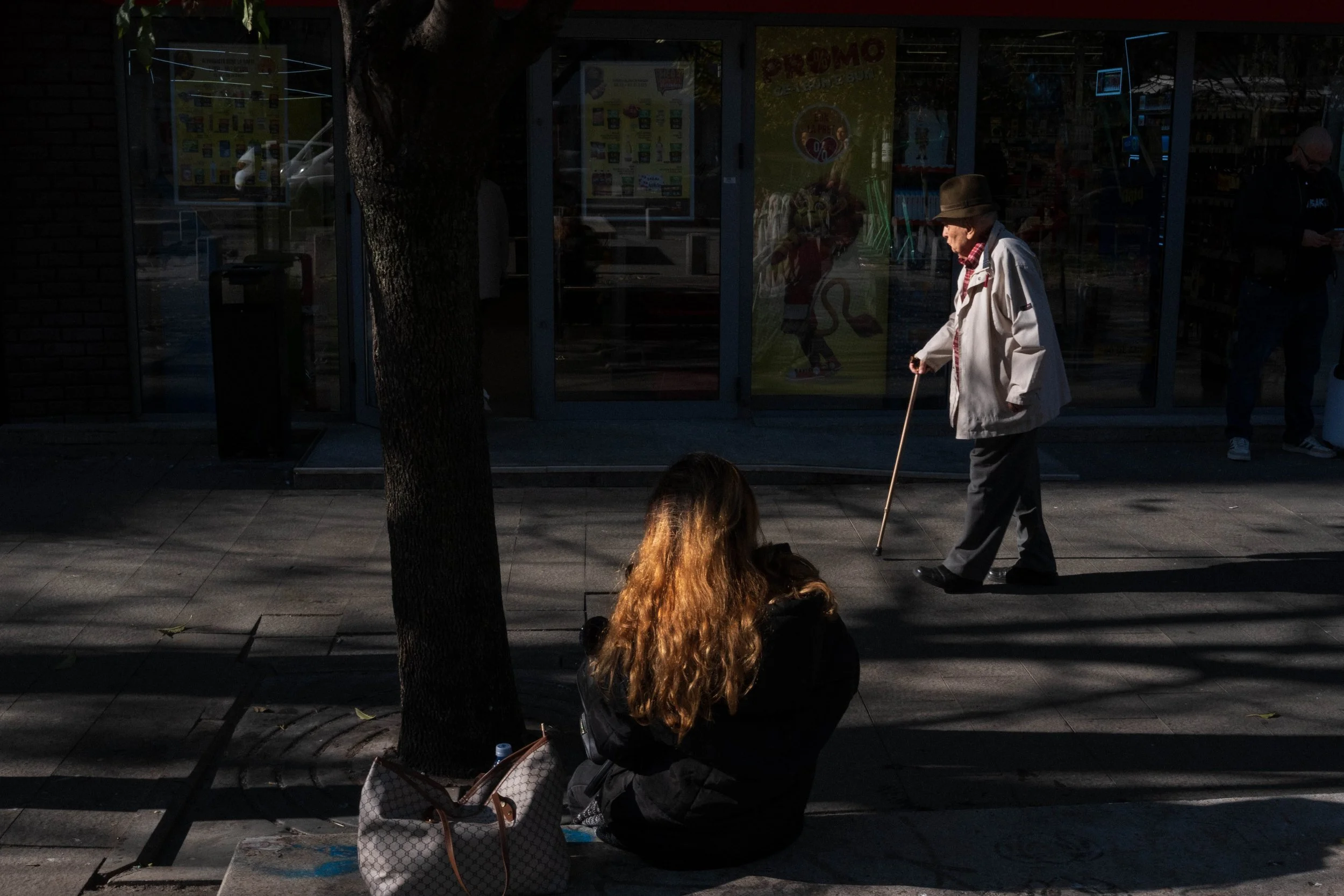
Nicolae Bălcescu Boulevard, Nov 2025
Old Town to Union Square (Piata Unirii)
I did not spend much time in the Old Town itself as, having largely been reconstructed in the 2000s, it felt somewhat lacking in atmosphere and overly touristy. I preferred to come here in the evening, after a day of photography, for a beer and to sample hearty Romanian cuisine. That said, it does host several historical attractions and museums, including the Museum of Communism, which provides valuable background into Bucharest’s relatively recent and darker history.
The Old Town is also where walking tours tend to begin, and from here it is easy to wander down to Union Square. This busy central hub is always lively and good for observing the daily flow of life, though it is not particularly sightly. Its centrepiece is an elaborate set of fountains, which I remember being impressed by during a visit in 2011, but which were under reconstruction at the time of my visit. From here it is worth detouring along the banks of the Dâmbovița River, which reflects the surrounding buildings and was lined with seasonally colourful trees in autumn.
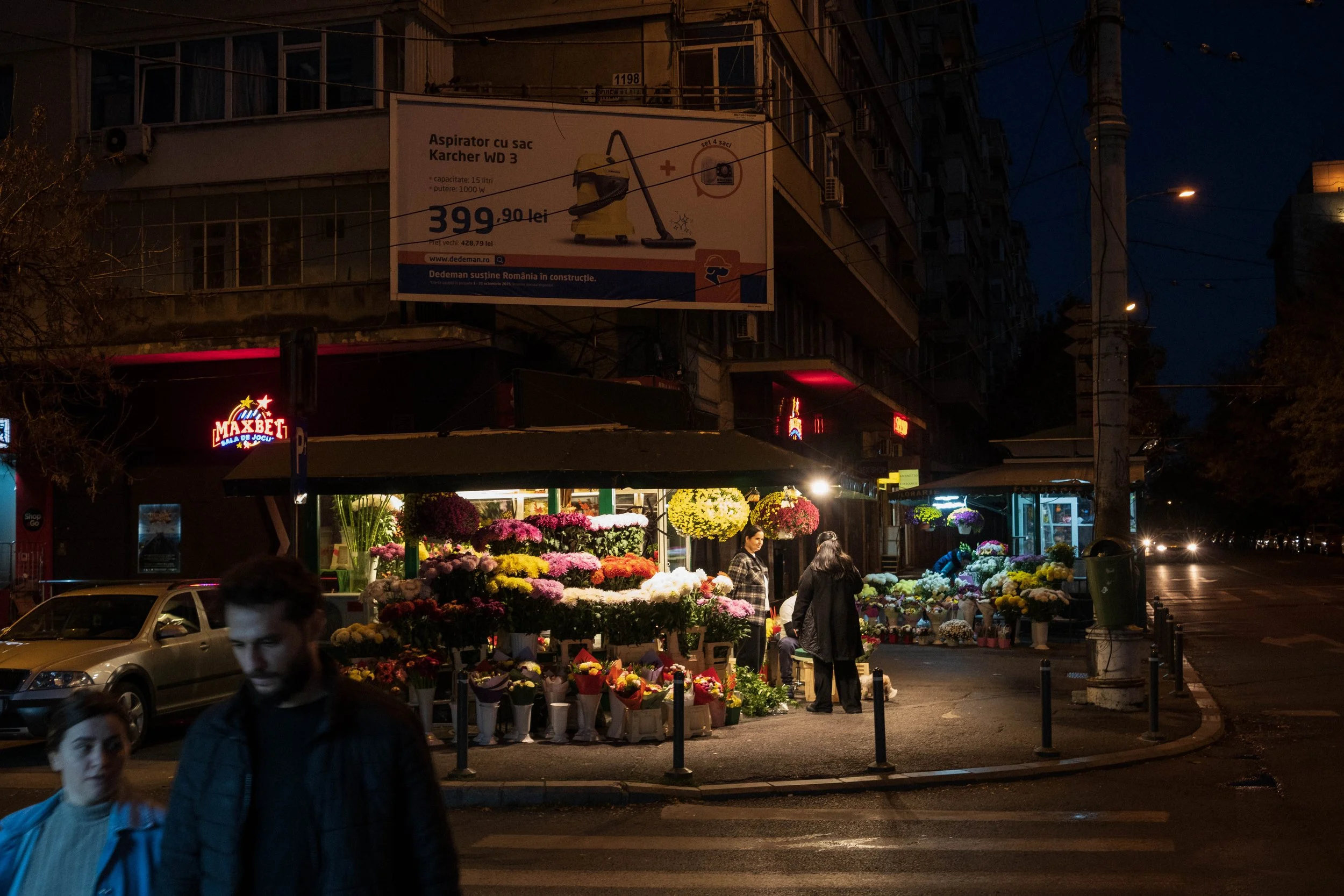
Gara de Nord area, Nov 2025
North Railway Station (Gara de Nord)
This may well be your first port of call in Bucharest if, like me, you take the train from Otopeni Airport (which I would recommend). While local tourism websites present Gara de Nord as an architectural gem, and perhaps it was when first built in the 1870s, I found it fairly unprepossessing. That said, its lack of modern redevelopment gives it - like parts of the metro - a distinct time-warp atmosphere. I visited one evening and managed to capture a few decent shots of the slightly seedy surrounding area.
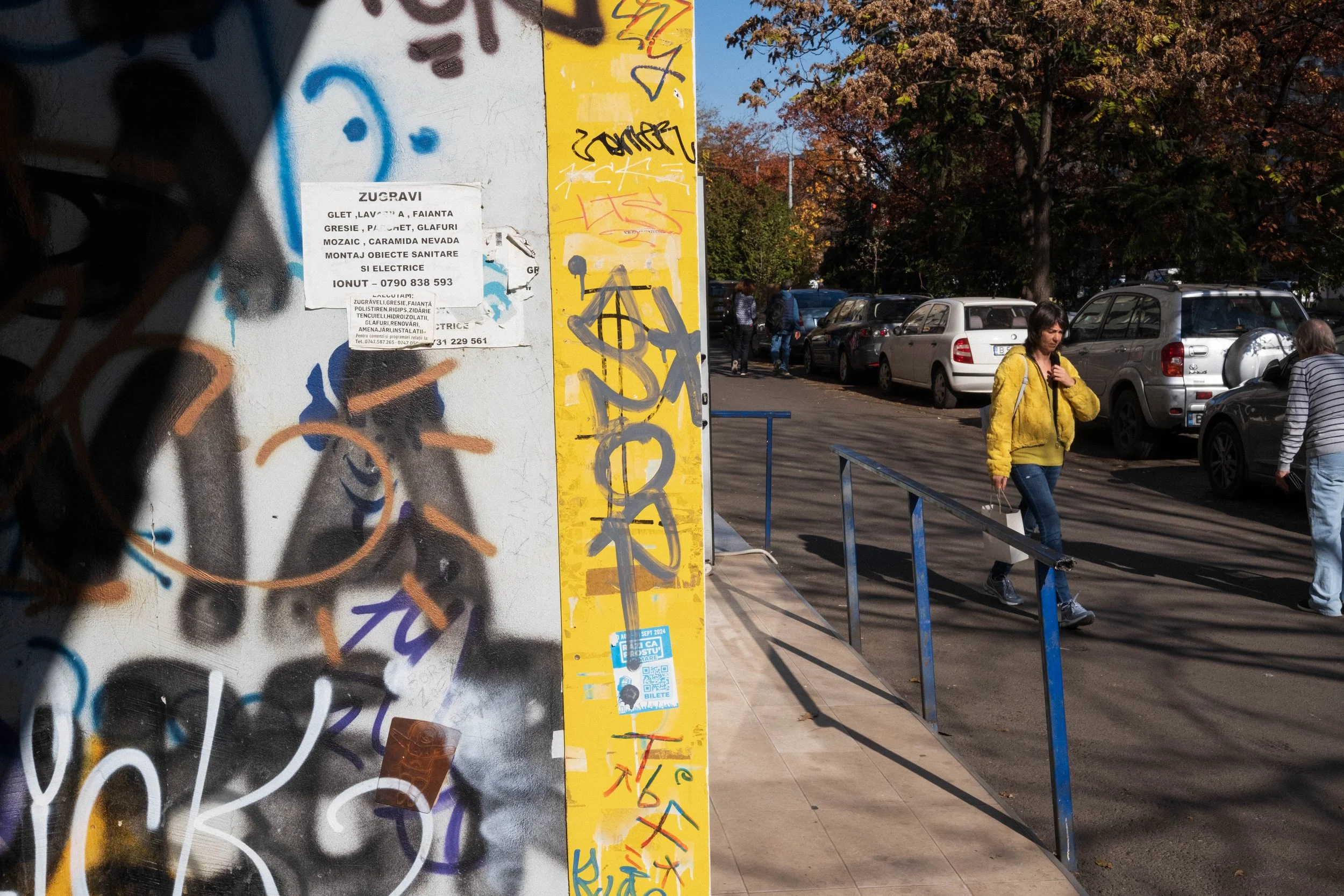
Colentina Avenue, Nov 2025
What makes Bucharest unique?
In short, Bucharest seems particularly well suited to architecturally inclined street photographers, or to anyone looking for an edgy, alternative vibe unlikely to be found in more polished European capitals. This is largely a legacy of the Communist era, which I found myself increasingly fascinated by - at times even more than by street photography itself.
I also enjoyed exploring the city’s parks and looking beyond the concrete to find small reminders of the “Paris of the East” that Bucharest once was. From a purely street photography perspective, I enjoyed Bucharest, though perhaps not quite as much as Warsaw or Budapest.