Impressions of Izmir
Turkey’s third-largest city, Izmir (İzmir) boasts a population of about 4.5 million and a beautiful setting on the Aegean Sea. When I visited for a week of street photography in November 2022, it felt like a more relaxed and less touristy version of Istanbul - with fewer landmarks and attractions, but an appealingly laid-back, authentic atmosphere.
To me, it seemed more a place to unwind, soak up the serene seaside ambiance, and watch the world unfold from trendy cafes and traditional restaurants than to rush between specific attractions, though there are those too. For photography, meanwhile, it seemed ideal for capturing everyday life in Turkey without the relentless crowds and chaos of Istanbul.
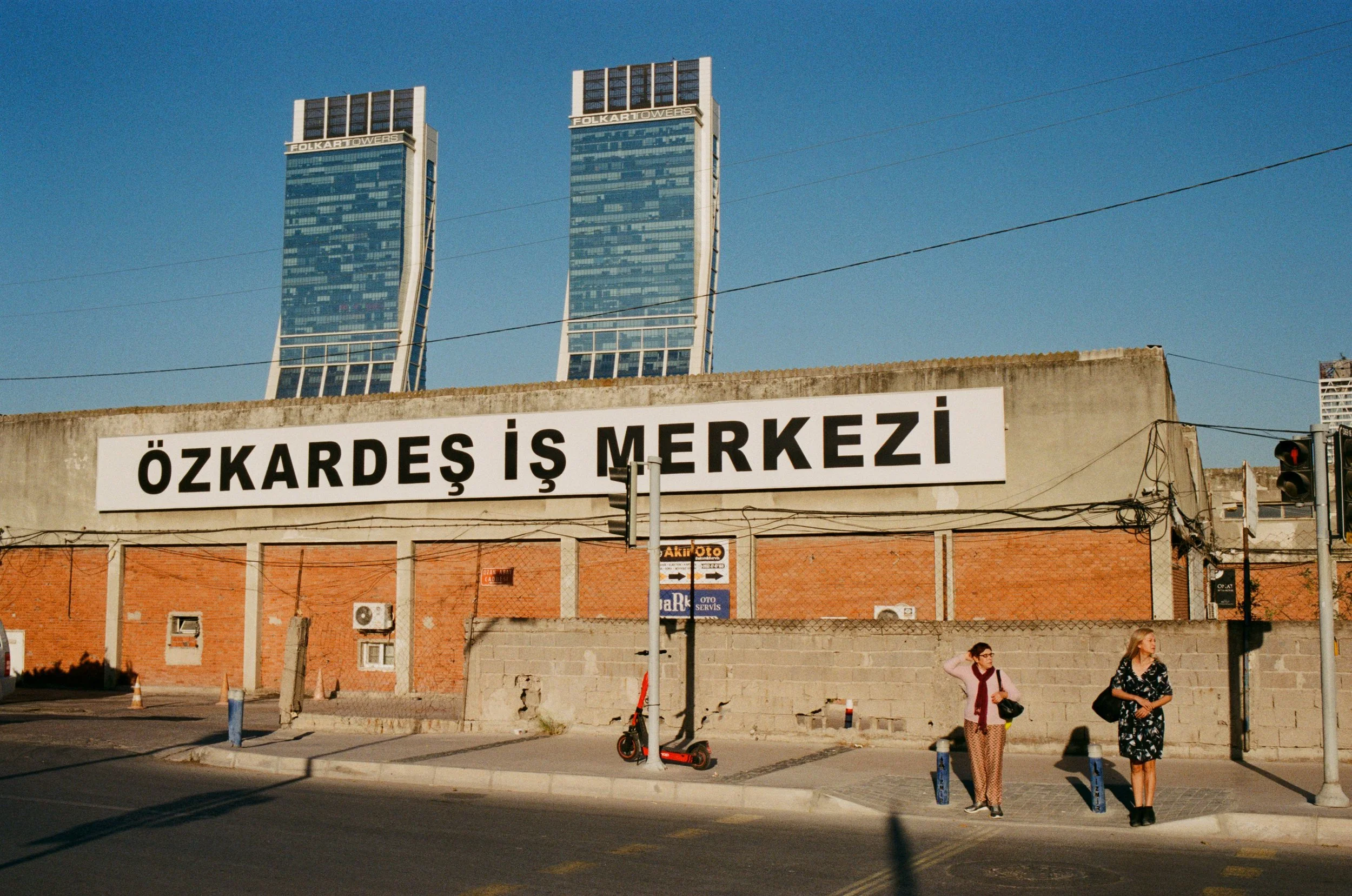
Bayraklı district, Izmir | Nov 2022.
Like Istanbul, however, Izmir also reportedly has a rich and multilayered history spanning some 8,500 years, although that may not be immediately obvious given the predominance of new architecture. Its past includes spells under Roman, Byzantine, Timurid, and other empires prior to falling under Ottoman rule in the 15th century and later evolving into an extremely cosmopolitan port city in the eastern Mediterranean.
An enlightening article in the Turkish magazine TurkishPress notes that by the 17th century, English, Dutch, French, and Venetian merchants had established a firm presence in the city (then called Smyrna), which was home to Greek, Armenian, and Sephardic Jewish communities, alongside older Turkish neighborhoods situated on the slopes of Mount Pagos, rising beyond the harbor.
Despite its less multinational makeup nowadays - largely a result of dispersal following the Turkish War of Independence, which culminated in Izmir in September 1922 - this bygone cosmopolitanism is reportedly still a palpable feature of the city, hidden particularly in its old architecture. A 2024 article in The New York Times described Izmir as an ever-evolving blend of different architecture, eras, and styles whose people are considered more progressive than elsewhere in Turkey.
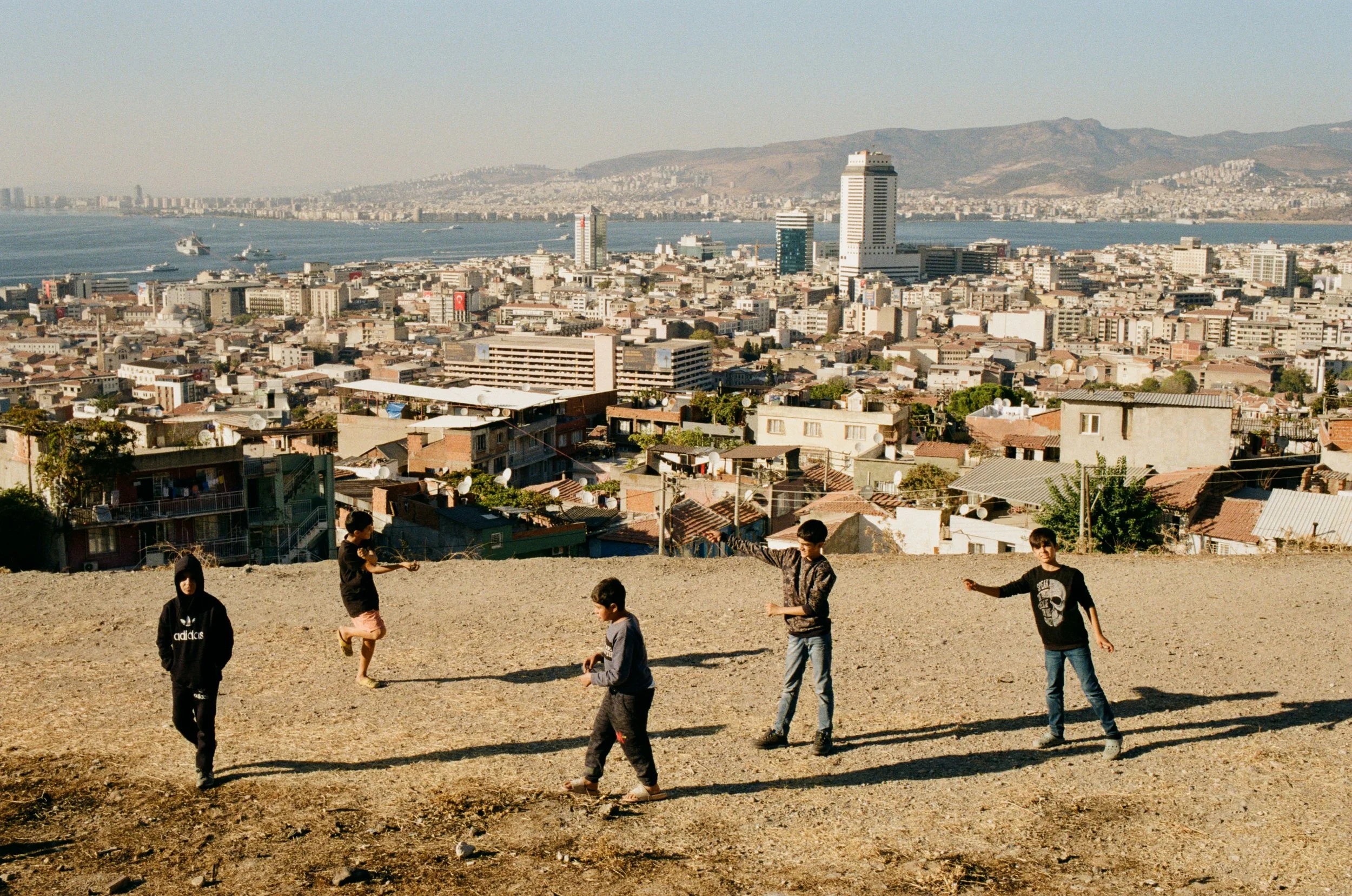
Climbing Mt Kadifekale, Izmir | Nov 2022.
Photo Hotspots
Though smaller than Istanbul, Izmir is nonetheless vast and encompasses numerous diverse districts. Compiling a thorough portrait of the city would take months or years. However, certain areas really stood out to me in terms of their potential for street photography.
Konak Square & Kemeraltı Bazaar - The historical heart of Izmir is dominated by the expansive Kemeraltı Bazaar, which was reportedly at the centre of local life during the city’s golden era as a Silk Road port in the 17th century. Thankfully unswarmed by tourists, I visited several times between photo sessions for a Turkish coffee, a slice of baklava, or a hearty post-walk kebab. Next to the bazaar lies Konak Square, home to Izmir’s famous Clock Tower, which was always abuzz with vibrant street life.
Kordon - Probably my favourite spot in Izmir, this embankment stretches for two miles along the Aegean seafront between Konak Square and the trendy district of Alsancak. It is frequented by people of all stripes - fishermen, families, couples, students, walkers, and joggers - who sit, stroll, and marvel at the amazing Aegean sunsets. Meanwhile, ferries toot their horns as they transport residents between Izmir’s various districts, and a charming yellow tram chugs characterfully along the waterfront.
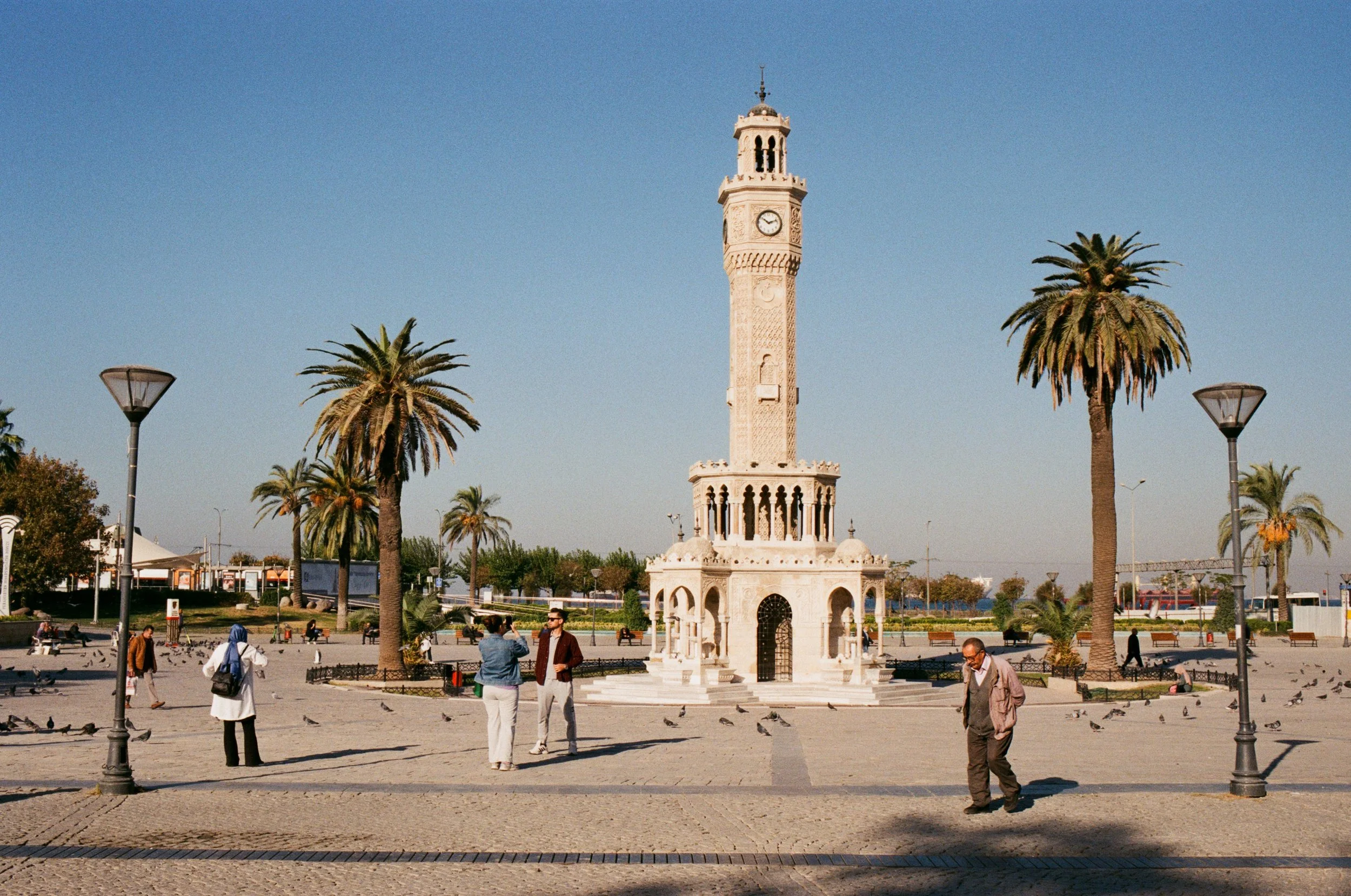
Izmir Clock Tower on Konak Square, Izmir | Nov 2022.
Karşıyaka - This bustling district lies across Izmir Bay from Konak Square, the Kordon, and Alsancak, which means you have to take a ferry to get there. But that journey is a great experience in itself and often conjures interesting scenes to photograph; I loved watching the evening sunlight flood the passenger cabins. Apparently once a separate town, Karşıyaka is now a busy commercial and residential district fronted by another long seaside promenade filled with street life.
Alsancak - Reportedly once inhabited by wealthier residents back in Ottoman times, this neighbourhood is still lined with attractive apartment blocks. Beyond its quieter residential streets, Alsancak boasts a particularly lively thoroughfare called Kıbrıs Şehitleri Caddesi, which, packed with shops, bars, cafes, and restaurants, creates a constant flow of young people and an energetic vibe.
Another area worth wandering around is Karataş, home to another famous Izmir monument, the Elevator Tower (Asansör), and historically the city’s Jewish neighbourhood (Izmir reportedly has a unique Sephardic Jewish heritage).
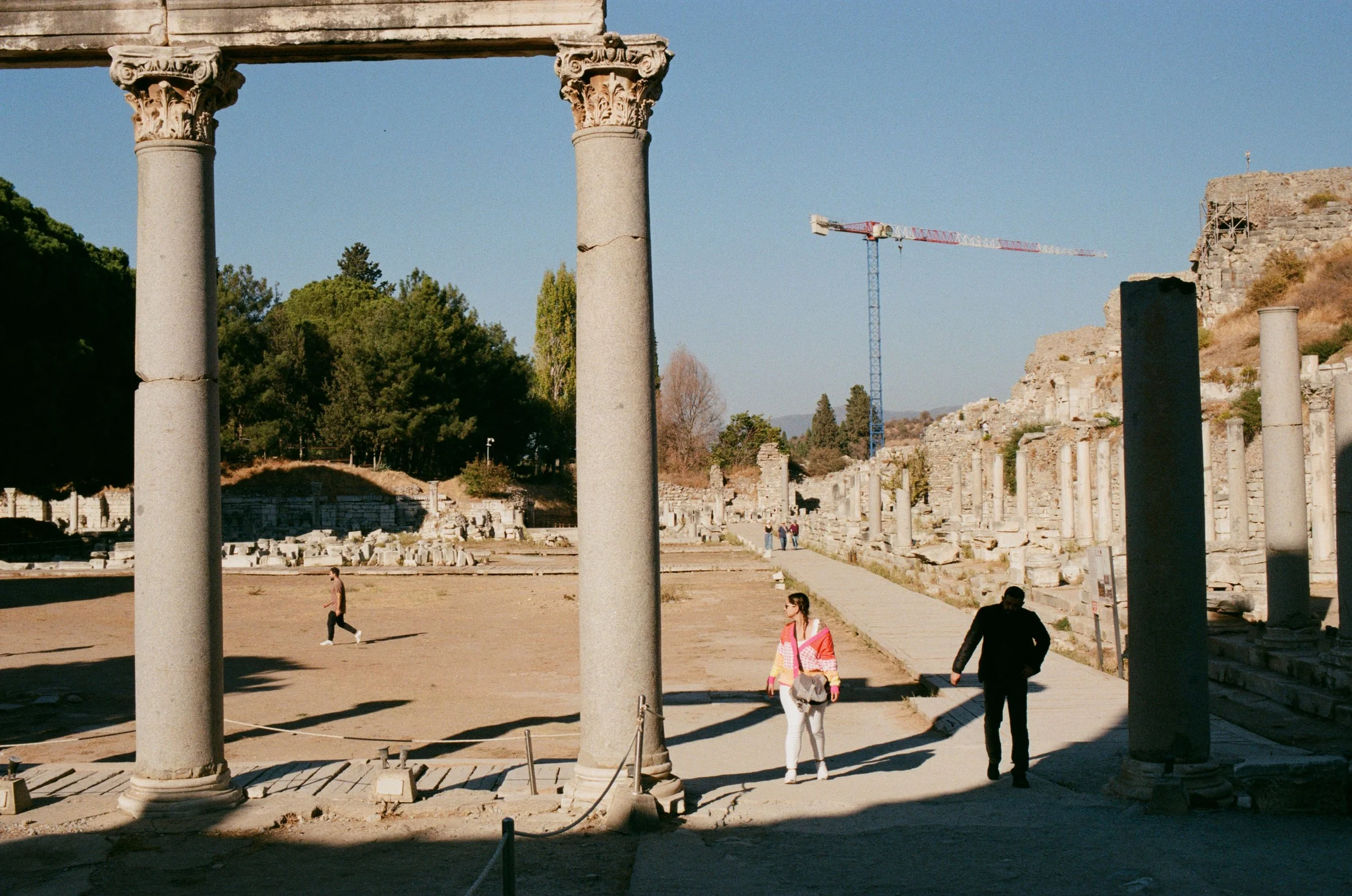
Ancient city of Ephesus, Izmir Province | Nov 2022.
Overall Impressions
In Izmir, I loved the ever-present proximity of the Aegean Sea, which provides a soothing, unhurried ambiance and attracts varied street life to its seaside promenades. As in Istanbul, I enjoyed riding the ferries across Izmir Bay to different parts of the city, particularly during golden hour and at sunset, which were spectacularly colourful in Izmir.
Another advantage was the opportunity to explore the wider Izmir region. On one day, I visited the UNESCO World Heritage site of Ephesus - the remarkably intact ruins of an ancient Greek and later Roman city - followed by the nearby mountain village of Şirince, which was very quaint, if somewhat touristy. On another day, I headed to the slow-paced coastal village of Foça: also very pretty, but too sleepy for street photography.