Exploring the Dark History of Bucharest
Bucharest’s history is evocatively etched in its architecture, but unlike more polished European capitals, it is dominated by one grim era that the dark tourist in me was eager to explore during a recent visit. Our walking tour guide, Alina, alluded to it almost immediately as our multinational group gathered at the edge of Bucharest’s newly revived Old City, lamenting that it amounted to only about 20 per cent of its original size, the rest having been demolished during the communist era.
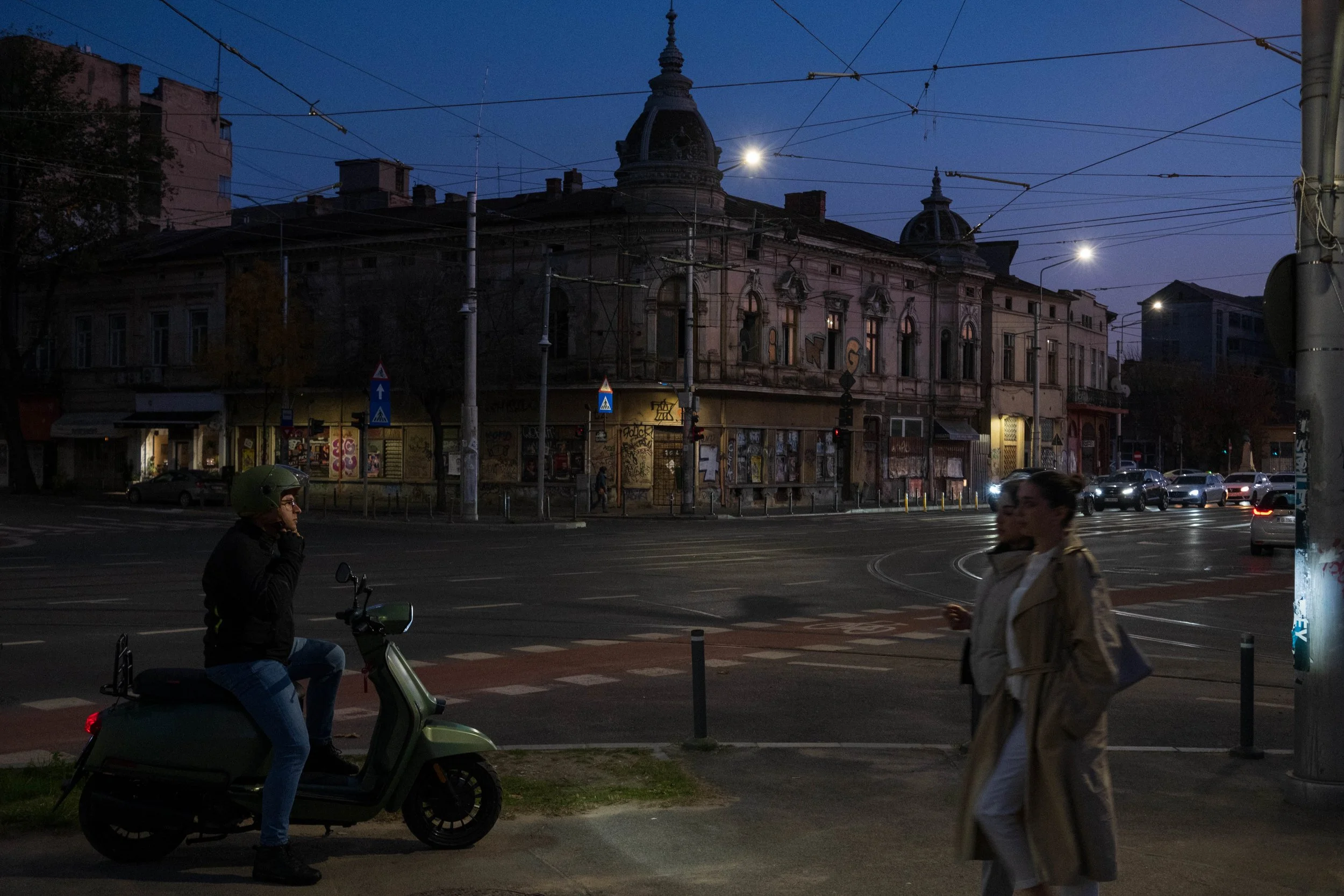
Pre-communist architecture in the North Railway Station district | Oct 2025.
From Little Paris
As we wandered through the city centre, the tour thereafter evolved into a crash course in modern Romanian history. I was intrigued to hear about Bucharest’s “Little Paris” period, so called because many of its grand buildings were designed by French architects during the roughly 70 years when Romania was a monarchy. None of the monarchs, Alina jovially noted, had been Romanian by origin. Nevertheless, she suggested that the country is now proud of this reclaimed heritage, shunned under communism.
I was equally interested to learn about Romania’s arduous path to independence, finally achieved in 1878 after some 500 years of Ottoman rule. At the time, however, the country was a shadow of its current self, consisting only of the historical principalities of Wallachia and Moldavia. Much of its present-day territory remained under Austro-Hungarian and Russian imperial control until the end of the First World War. As a result, Alina explained, linguistic and cultural differences can still be observed across the country today, from Hungarian influence in the north to Turkish in the south, and Russian in neighbouring Moldova, formerly part of Moldavia.
The monarchy survived until after World War II, a complex and turbulent period in Romanian history. Under the dictatorship of Ion Antonescu, the country initially allied with Nazi Germany before switching sides in 1944, following the intervention of the 19-year-old King Michael. While this spared Romania the humiliation of defeat, it also meant aligning with the Soviet Union and effectively falling under a new occupation, with far-reaching consequences.
Alina went on to describe how the Soviets subsequently backed Romania’s small Communist Party, enabling it to expand rapidly from fewer than a thousand members to around a million, falsify elections in 1946, and seize power the following year. King Michael I was forced to abdicate, and the Romanian People’s Republic was proclaimed, later becoming the Socialist Republic of Romania. Although there were three leaders during the Communist period, it was the last, Nicolae Ceaușescu, who assumed power in 1965 and ruled for 24 years, who came to epitomise this oppressive chapter in the country’s history - which even today feels viscerally present in Bucharest’s stark, brutalist backdrop.
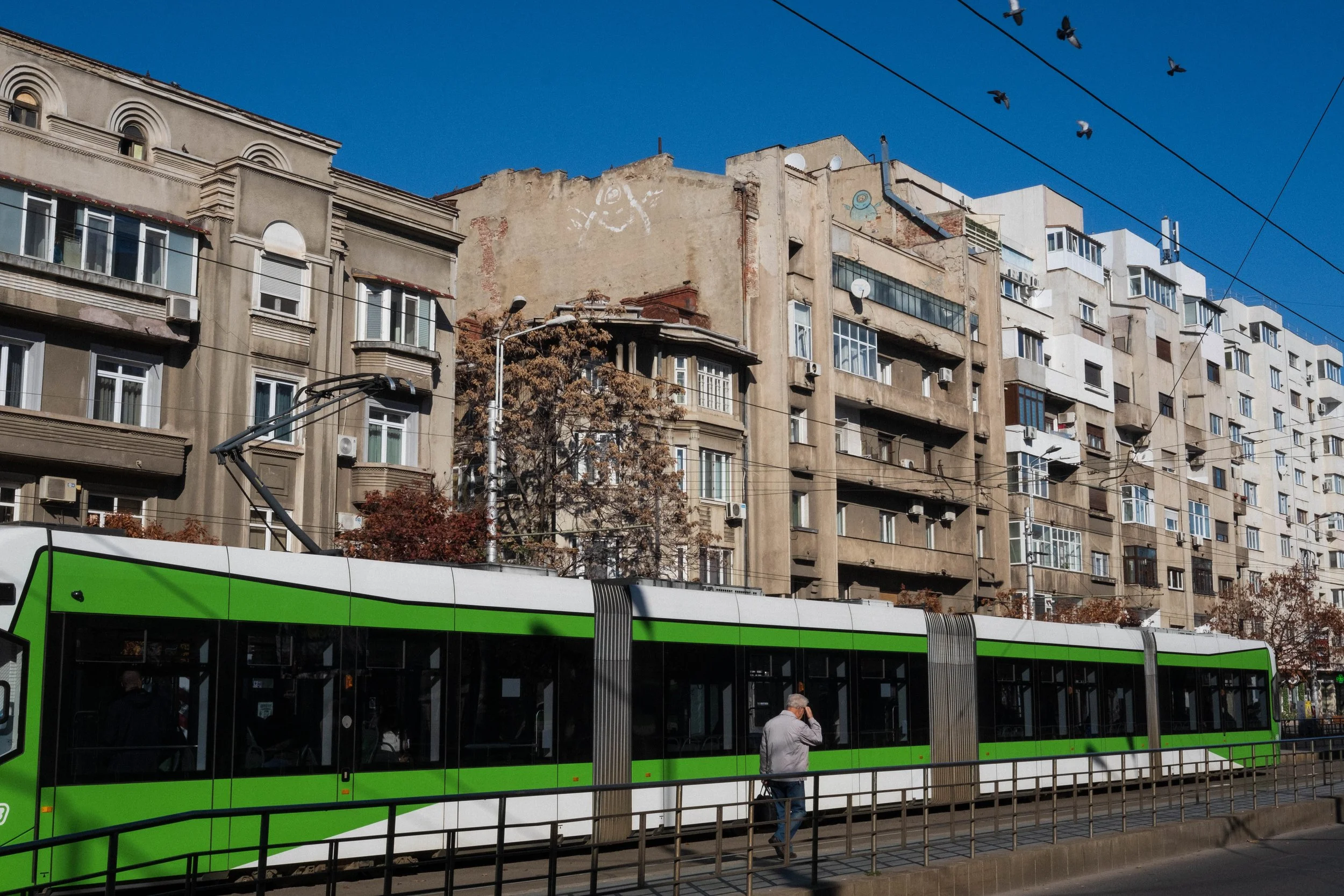
King Ferdinand I Boulevard | Oct 2025.
To Little Pyongyang
Eager to immerse myself further in it, I joined a second walking tour the following day, this one devoted to “Life in Communist Bucharest”. It began, somewhat counterintuitively, at the monument to the 1989 Revolution, which famously brought communism to an end in Romania. Ana, our guide - a Bucharest native whom I assumed had been born around the time of the revolution - explained how it had been driven largely by young Romanians. They had sensed an opportunity to overthrow the regime after hearing about the fall of the Berlin Wall on underground radio stations and seeing glimpses of Western living standards in imported films.
However, unlike the mostly peaceful collapse of communism elsewhere in the Eastern Bloc, Romania’s revolution claimed the lives of more than 1,100 people, most of them young. Initially, the army sided with Ceaușescu and fired on crowds that booed his speech on 21 December 1989. The following day, however, the army switched sides. Ceaușescu and his influential wife, Elena, fled by helicopter, only for the pilot to disobey orders and land near the town of Târgoviște, northwest of Bucharest. There, the couple were arrested and, on Christmas Day, subjected to a summary trial and executed - a dramatically swift end to what must have seemed an immovable system.
Ana also recounted the everyday travails of life under communism. In its early years, they had not been too harsh, as after condemning the Soviet invasion of Czechoslovakia in 1968, Ceaușescu gained approval - and financial support - from the West. This illustrates how he sought to forge an independent path for Romania, positioning it as a bridge between East and West, Ana noted. For a time, the strategy appeared to work: living standards remained relatively stable during the 1970s, which also saw projects such as the Bucharest metro, whose austere, dimly lit stations still transport the traveller back to the communist era.
The turning point came after Ceaușescu’s 1971 visit to North Korea, where he met Kim Il Sung and was reportedly impressed by his cult of personality, as well as by Pyongyang’s vast boulevards and monumental apartment blocks. Following a major earthquake in Bucharest in 1977, Ceaușescu sought to reshape the city in a similar image, at the expense of its fin-de-siècle architecture and some 40 Orthodox churches. “Bucharest went from being known as ‘Little Paris’ to ‘Little [East] Berlin’,” Ana lamented.
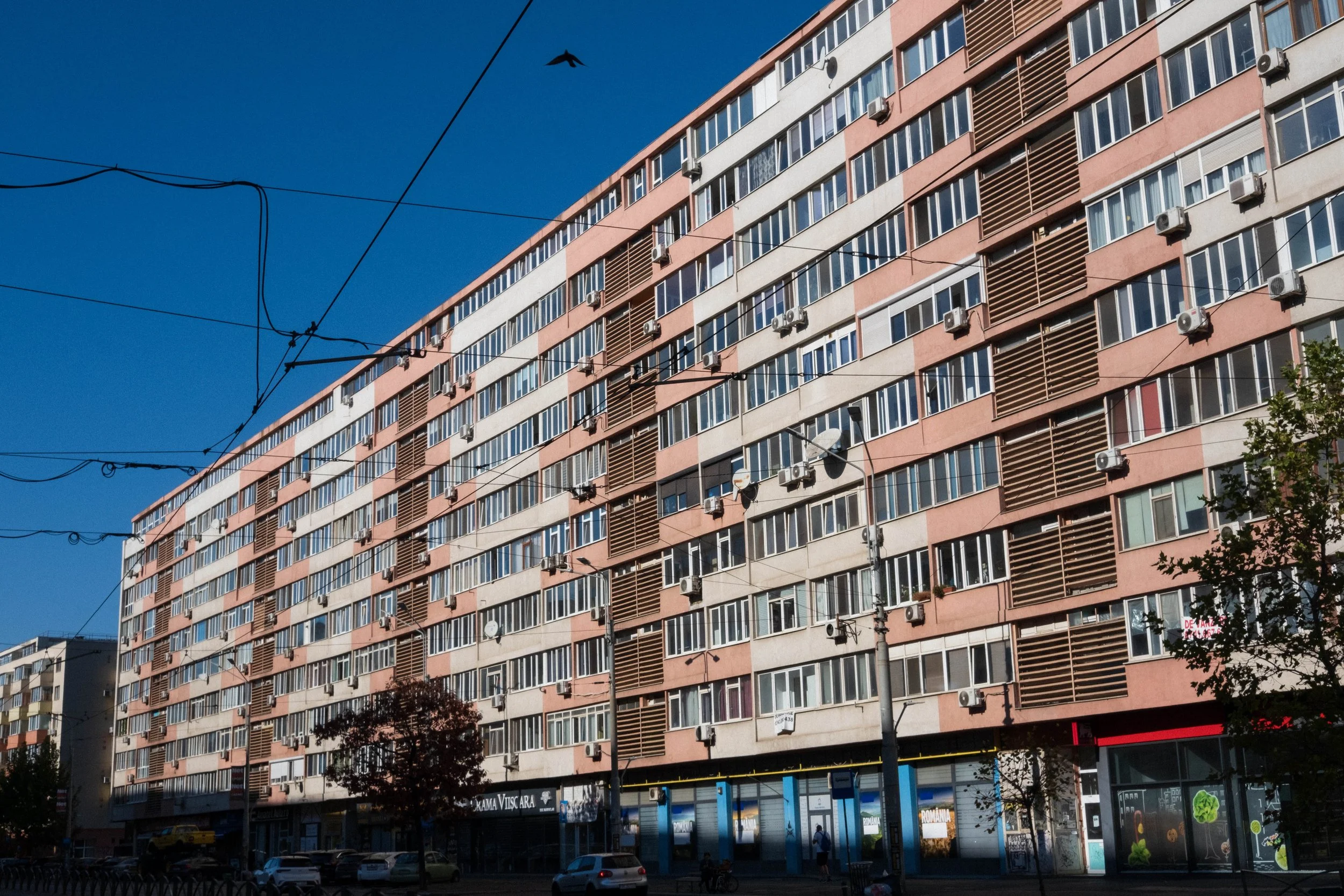
Apartment blocks on Stefan cel Mare Street | Oct 2025.
Scarcity and suppression
As the concrete continued to accumulate across Bucharest in the 1980s, Ceaușescu became obsessed with paying off Romania’s vast foreign debt. To do so, his regime exported the country’s best produce, reduced imports, and imposed severe rationing of electricity, heating, television, and food. Families resigned themselves to queuing for hours to buy everyday necessities. The apparent aim was to free up funds by making people consume less. Another disaster followed Ceaușescu’s earlier decision to ban abortion and contraception, leading to an estimated 10,000 women dying as a result of unsafe, self-administered procedures, and thousands of unwanted children ending up in orphanages - all in a misguided effort to boost the workforce and make Romania “great”.
Meanwhile, the Ceaușescus and the Communist Party elite lived lavishly, a contrast epitomised by the Palace of Parliament that he ordered to be built at an estimated cost equivalent to around €4 billion. By this point in the tour, we had navigated Bucharest’s traffic-clogged backstreets to stand before the hulking, Stalinist, wedding-cake-like structure. Ana rattled off a series of astonishing facts to illustrate its absurdity: including that it was the second-largest administrative building in the world, and that an entire neighbourhood was levelled to make way for it.
How was such a grotesquely unjust system maintained for so long? I wondered. The answer, according to Ana, was by means of a feared secret police, the Securitate, leaving ordinary citizens with little room for resistance. At its height, the Securitate maintained a network of informers thought to number as many as 700,000, including priests and even family members. Its reach penetrated deep into the national psyche, eroding trust and fostering a culture of silence. Even jokes about the regime could result in prison sentences.
“But does anyone feel nostalgia for the communist era?” I asked Ana once she had finished recounting the everyday hardships. “There are some,” she admitted reluctantly, adding that they tend to appreciate the guaranteed jobs and housing - sentiments I have encountered elsewhere in post-Soviet countries, particularly among older generations.
After these illuminating walking tours, and during my subsequent wanderings around Bucharest, it was difficult to reconcile the city of scarcity under Ceaușescu with the abundance of food, fashion, and energy on display today beneath his North Korean-inspired architecture. Yet, encountering this painful period so vividly woven into the city’s fabric seemed a timely reminder of the enduring legacy of autocracy and populism.